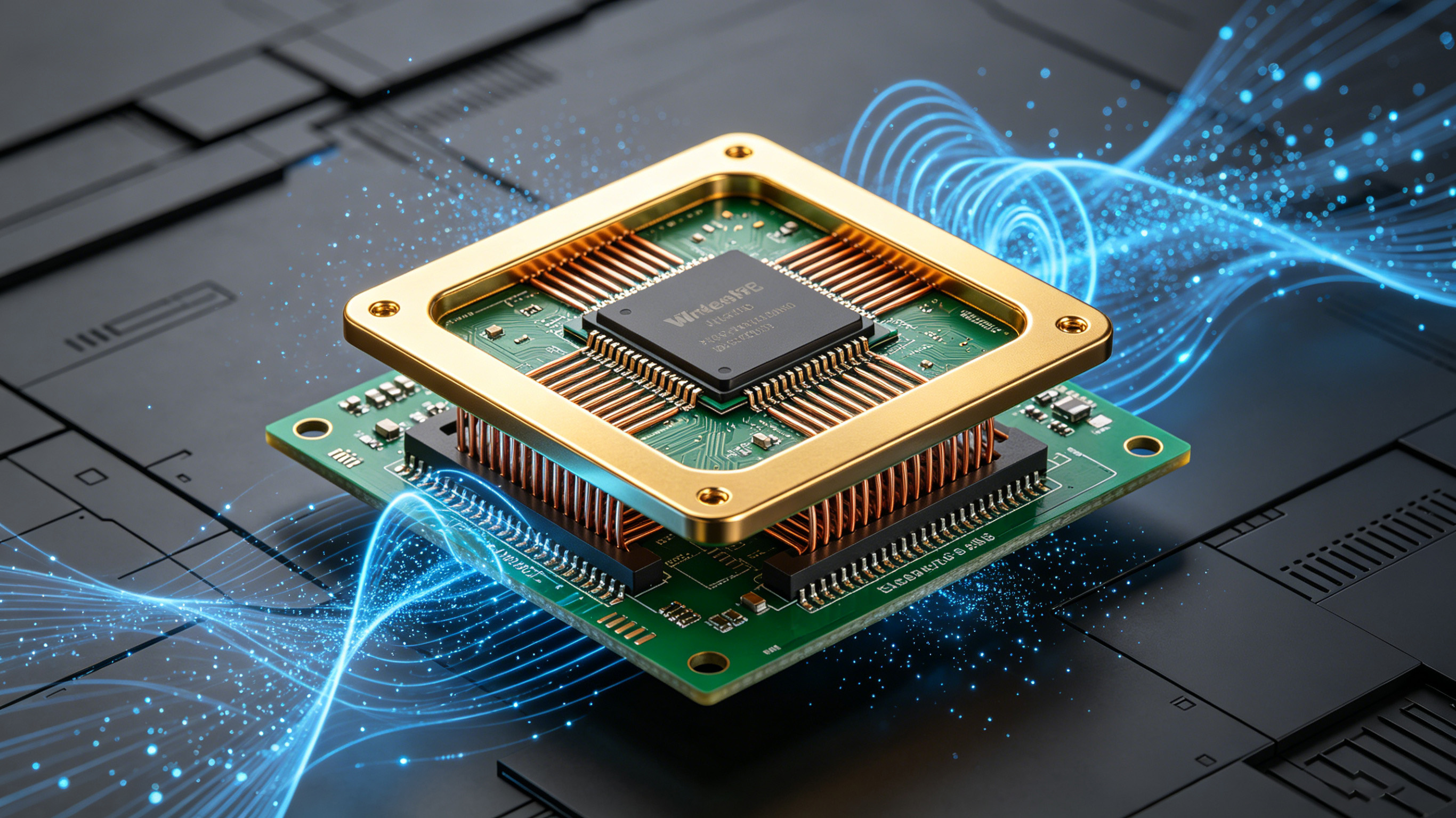





The Universal Popularity of Wireless RF Modules: Why They Dominate Modern IoT Industries
December 5, 2025
With the rapid expansion of the global Internet of Things (IoT), smart connectivity has evolved from a luxury feature into a basic industry standard. At the heart of this wireless revolution lieswireless RF (Radio Frequency) modules. These compact, reliable, and cost-effective communication components have achieved extremely high market penetration, covering almost every field of modern electronics, industrial automation, and intelligent terminal equipment. Their wide popularity stems from their outstanding stability, ultra-low power consumption, flexible compatibility, and plug-and-play design, making them the most mainstream wireless solution worldwide.
1. Full Coverage of Consumer Electronic Products
Wireless RF modules have achieved complete popularization in the consumer electronics industry. Unlike complex custom communication circuits, standardized RF modules greatly reduce product development difficulty and manufacturing costs, so they are widely adopted by global electronics manufacturers.
From wearable smart devices such as 4G smart watches, smart employee ID cards, and Bluetooth tracking tags to daily smart home devices including smart lights, wireless switches, and infrared sensors, almost all small wireless intelligent terminals rely on RF core communication technology. Thanks to miniaturization and low-power optimization, modern RF modules can be embedded in ultra-thin and lightweight consumer devices without affecting battery life or product appearance, realizing full penetration in civilian smart hardware.
2. Universal Adoption in Industrial IoT Scenarios
Industrial automation is one of the most mature and largest-scale application markets for RF modules. Traditional industrial wired communication has obvious limitations such as high wiring costs, difficult maintenance, and poor scalability. RF wireless modules perfectly solve these pain points and have become a universal standard for industrial intelligent transformation.
At present, most factories, manufacturing workshops, and industrial sensing networks worldwide use RF modules for data collection and device interconnection. They are widely installed on industrial sensors, monitoring terminals, PLC control equipment, and wireless gateway devices to support real-time transmission of production data, equipment status feedback, and remote industrial control. Whether it is high-temperature, high-humidity, or high-electromagnetic-interference industrial environments, upgraded industrial-grade RF modules can maintain long-term stable operation, realizing large-scale popularization in Industry 4.0 smart factories.
3. Wide Popularization in Smart City & Public Infrastructure
Urban intelligent construction around the world greatly promotes the universal application of wireless RF modules. In smart city systems, a huge number of terminal sensing nodes need stable, low-cost, and long-distance wireless communication support, and RF modules are the most suitable solution.
They are extensively used in smart streetlight control, remote water/electricity meter reading, urban environmental monitoring, intelligent parking systems, community security alarms, and public safety positioning systems. The entire urban public service and infrastructure system has basically completed the large-scale popularization of RF wireless technology. It can be said that modern smart city operation cannot be separated from the support of distributed RF module networking.
4. In-depth Penetration in Emerging Vertical Industries
In addition to traditional consumer and industrial fields, RF modules are rapidly penetrating various emerging vertical industries, continuously expanding their market coverage.
In smart agriculture, RF modules are applied in greenhouse monitoring and farmland sensor data transmission to support precision agricultural management. In intelligent transportation, they assist in vehicle monitoring, road condition sensing, and traffic equipment wireless linkage. In logistics and warehousing, RF positioning modules realize real-time tracking of goods and intelligent inventory management. In medical and health scenarios, low-power RF modules support wireless data transmission of portable medical monitoring equipment.
The continuous expansion of vertical scenarios further proves the strong universality and super-high popularity of RF wireless module technology.
5. Core Networking Carrier for Global IoT Gateways
Wireless gateways are the core hubs of IoT networking, and RF communication modules are their essential built-in components. A large number ofBluetooth gateways, 4G gateways, and industrial IoT gateways on the market adopt standardized RF module solutions.
This standardized design not only improves the compatibility and versatility of gateway equipment but also accelerates the global popularization of wireless IoT networking systems. Whether it is household small-scale networking or industrial large-scale cluster networking, RF modules can efficiently complete multi-device concurrent access and stable data aggregation, becoming the most widely used communication unit in the global gateway industry.
Why RF Modules Achieve Ultra-High Industry Popularity
The universal popularity of wireless RF modules is not accidental, but driven by inherent technical and market advantages:
- Standardized design: Highly universal specifications, easy for mass production and secondary development
- Cost-effective: Significantly reduce R&D and production costs for terminal manufacturers
- Strong adaptability: Support multiple frequency bands, suitable for civil, industrial, and commercial scenarios
- Low power consumption & high stability: Meet long-term standby and uninterrupted operation requirements
Final Conclusion
From consumer wearable devices and smart homes to industrial IoT, smart cities, and emerging vertical industries, wireless RF modules have achieved full-scene, cross-industry universal popularization. As the most fundamental and core wireless communication component of the IoT era, RF modules will continue to expand their coverage with the continuous iteration of global intelligent technology and maintain an irreplaceable core position in the wireless communication industry.